Your path to a bow from our workshop
A bow is something deeply personal. Its response, the way it feels in your hand and the sound it helps you create shape your daily music-making. That is why a new bow from our workshop begins with your experiences and wishes.
In our workshop, there are two paths to choose from: a copy of a bow whose qualities you particularly value – signed in several places with the monogram T. M. G. or G. T. S. – or one of our models, signed THOMAS M. GERBETH, WIEN or GERHARD TH. SEIFERT, WIEN, which we tailor to your wishes in consultation with you.
Copies – a second favourite bow
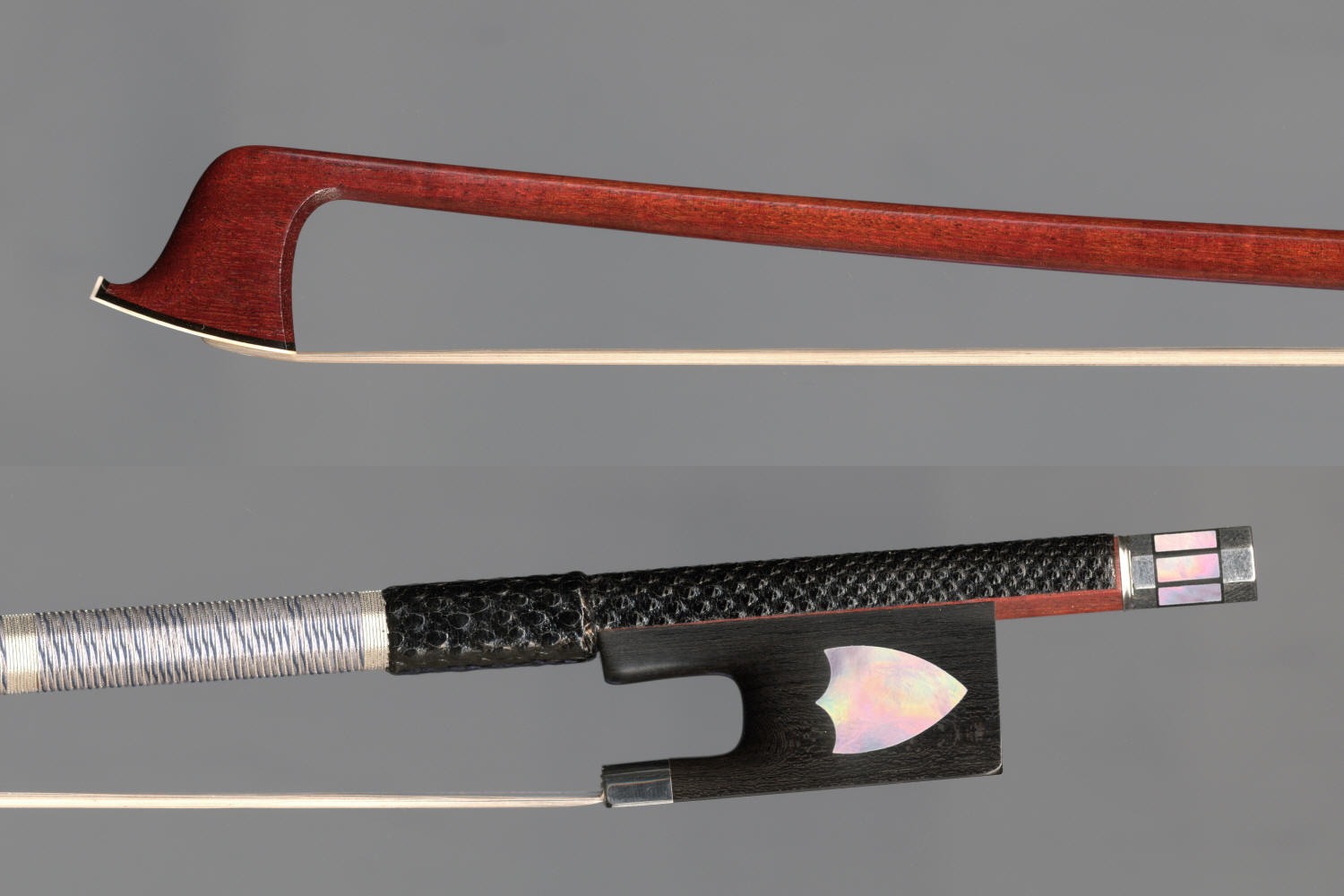
You know a bow that you particularly enjoy playing – your ideal bow. Perhaps it belongs to someone else and is not for sale. Or you would like a second bow with playing qualities as close as possible to those of your own familiar bow, to spare the original or have a familiar alternative at hand.
Our copy takes that particular bow as its starting point. Alongside its appearance, we focus above all on what you value when playing: its response, its sound and the way it reacts to your movements.
If you do not own the bow, we require its owner’s agreement before making a copy.
Why appearance alone is not enough
Two bows can look almost identical yet feel very different in use. What matters is the interaction between the wood, dimensions, weight distribution and camber – the curve of the stick. The density and elasticity of the wood, and how stiffness varies along the stick, influence the way the bow yields under your hand and responds on the string.
For a copy, we therefore select a pernambuco blank whose physical properties match those of the original as closely as possible. Our measuring method helps us make this selection and check the work as it progresses. The making process combines traditional craft techniques and tools with precise measuring methods, 3D software and CNC technology.
The camber is also part of the original’s character. An unusual curve is not necessarily a flaw: together with the properties of the wood, it may contribute to precisely the qualities you love in your bow.
One day to take the measurements
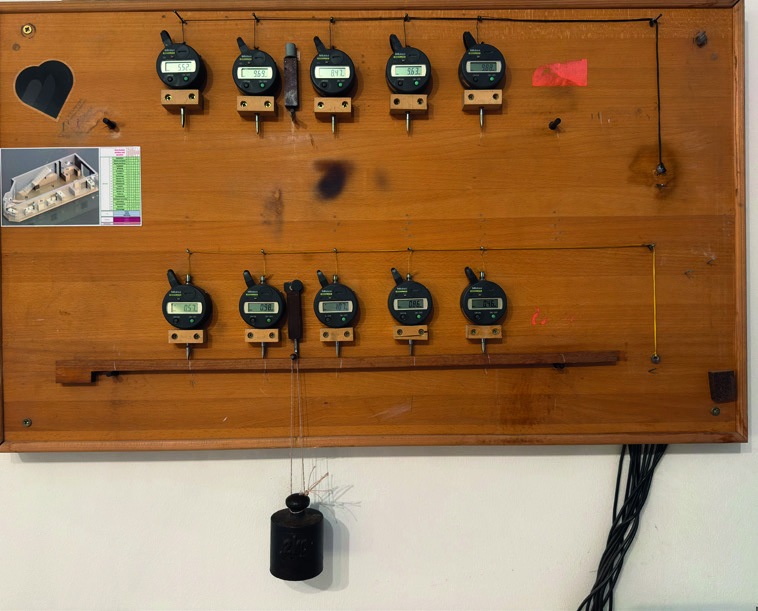
Using the ArcoMeter, we measure at several points how far the stick bends under a precisely defined load. The ArcoWin software evaluates these measurements. This allows us to compare the material properties of the original with those of suitable bow blanks. This helps us select wood that can reproduce the original’s weight, balance and stiffness profile as closely as possible.
We need the original in our workshop for approximately one day for measurement and documentation. We record the required physical and geometric dimensions, including lengths, cross-sections, camber, and the weights and balance points of the bow and its individual components.
To obtain accurate data, the bow must be rehaired. The resulting documentation allows us to make the copy without keeping the original in our workshop throughout the subsequent work.
We discuss the appointment, specification, costs including the rehair, and estimated completion date with you in advance.
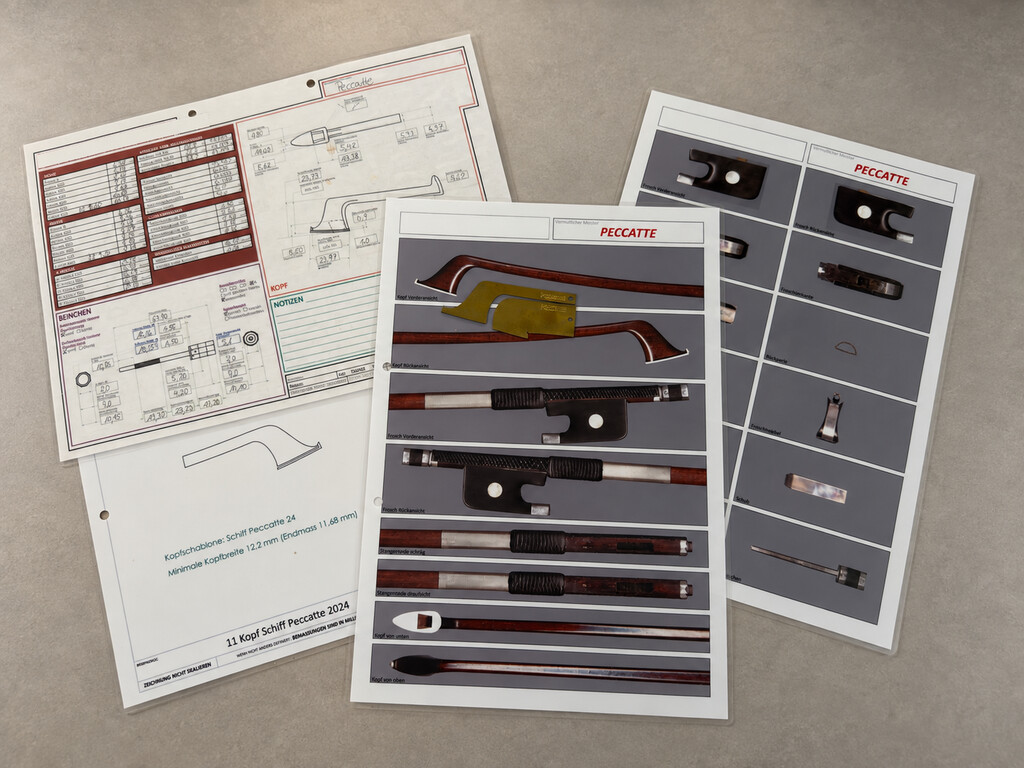
From the original to a complete working record
The measurement process produces a data sheet recording all measurable properties of the bow. This is accompanied by photographs of all required views, a dimensioned outline of the head and a brass head template for making the copy.
Not shown in the photograph is the camber template: a wooden board on which we record the exact curve of the stick. The head and frog are also recorded as three-dimensional models on the computer.
Together, these records allow us to make the copy without having the original physically present in the workshop throughout the work.
A matching bow blank is essential
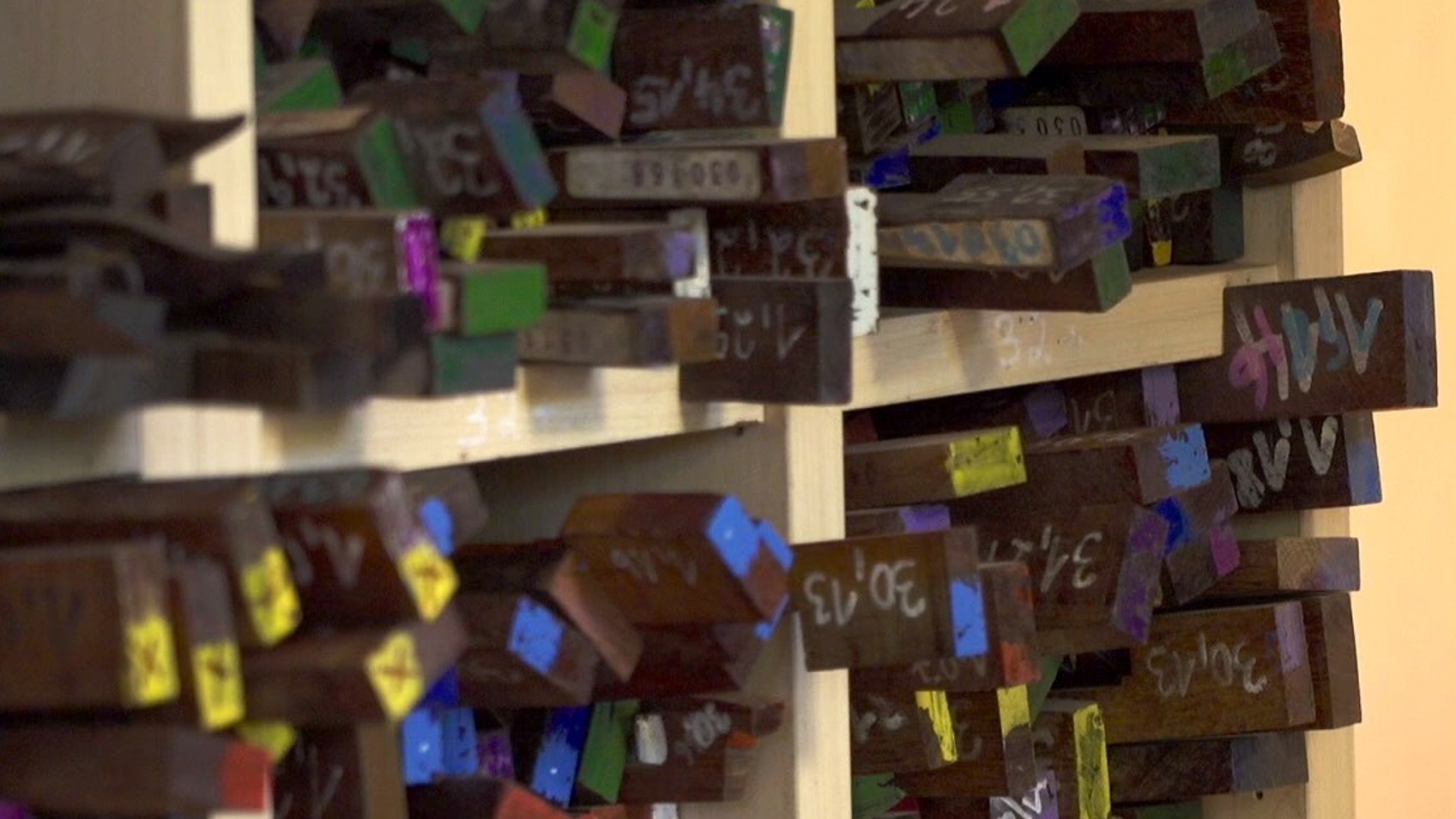
Before we can accept a commission for a copy, the measured stiffness and density values of the original must match those of a blank in our extensive stock of wood. Only this match provides the basis for achieving nearly the same properties using the documented dimensions. We therefore check that suitable material is available before accepting the commission.
Fine-tuning through playing together
Wood is a natural material. Even with careful selection and precise craftsmanship, every bow remains an individual piece. A copy can come very close to the original, but complete agreement in every playing and tonal quality cannot be promised.
That is why trying the bow together is part of the fine-tuning process. You know the original and your instrument best. Your feedback helps us understand any remaining differences and refine the copy through careful adjustments to the camber.
If you would like to change particular qualities deliberately, please discuss this with us early on. An accurate copy also reproduces the original’s individual characteristics. Together, we consider which departures are useful and how they may affect the interplay of its properties.
Models – shaped around your wishes
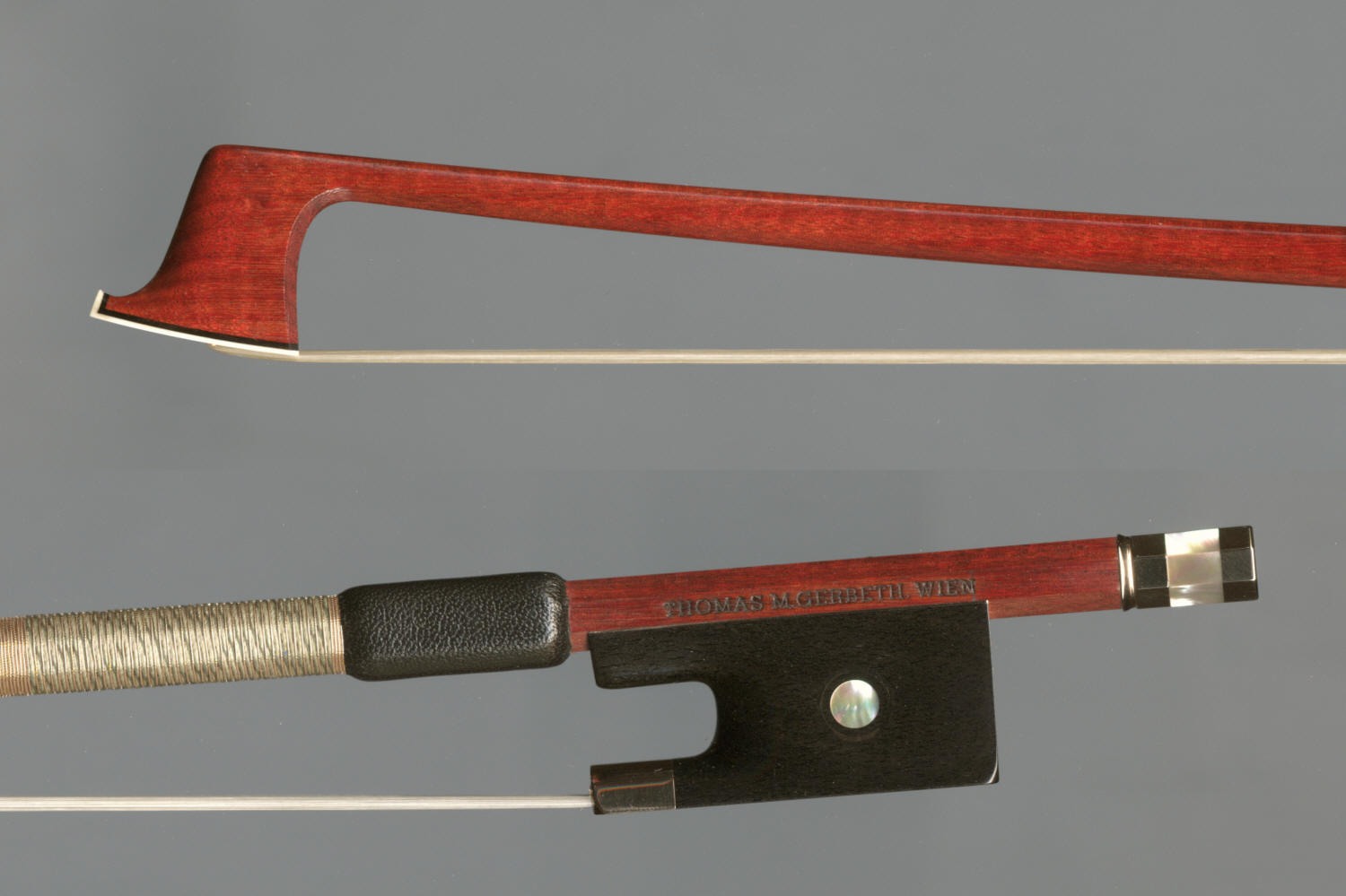
If you are looking for a new bow without having a particular original copied, we work with you to develop a suitable specification based on our models.
We are happy to arrange a personal consultation in our workshop. Please bring as many of your bows as possible – both those you enjoy playing and those that suit you less well. You are also welcome to bring other bows whose qualities you know well.
Comparing them helps us understand what you value in a bow and what you would like to be different. Taking some measurements helps us relate your playing experiences to the physical and geometric properties of the bows you bring.
On this basis, we discuss how to shape your new bow. We consider weight, balance, sound, stiffness, resistance and bouncing behaviour together. What matters is the combination of qualities you seek for your music-making.
We agree on the specification, costs and expected timeframe with you.
Carefully chosen materials of legal origin
For every component of our bows, we use only materials whose origin and use comply with applicable legal and species-protection requirements. This applies to the wood of the stick as well as the materials used for the frog, button, head plate and hair, as well as the thumb leather or protective leather at the end of the stick.
For cross-border purchases, we clarify in advance which documents are required for export and import. We are happy to answer your questions about the materials used and the accompanying documentation.
The documents accompanying your new bow
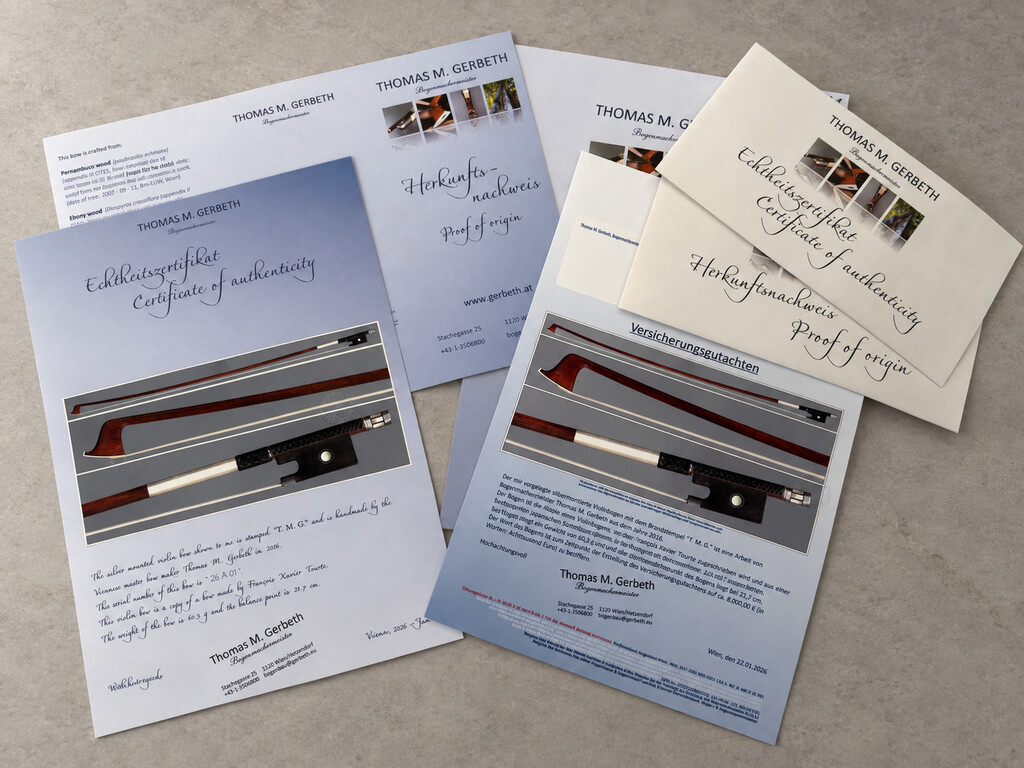
Every bow from our workshop – whether a copy or one of our models – comes with its accompanying documents:
Certificate of authenticity
The certificate confirms that your bow was made by us in our workshop.
Insurance valuation
The valuation records the insurance value of your bow and provides your insurer with a basis for arranging cover straightforwardly.
Proof of origin
The proof of origin records the provenance of all materials used in the bow and documents the legal origin of its pernambuco wood.
When travelling or transporting your bow outside the European Union – including to Switzerland, Great Britain and Norway – this document helps you demonstrate its materials and legal provenance.
German Federal Agency for Nature Conservation: travelling with musical instruments →
Let us talk about your new bow
You do not need to decide whether a copy or one of our models is right for you before getting in touch. Tell us what you value in your current bow and what you would like from a new one.
Please contact us to arrange a personal consultation in our Vienna workshop. You can reach us by email, telephone, WhatsApp or Signal.
 Phone
Phone WhatsApp
 Signal